 English,
 Spanish,
 Polish,


Free Consultation
630-932-9100

-

- Home
- Our Firm
- Practice Areas
- Divorce
- Alimony and Maintenance
- Child Support
- College Expenses
- Special Needs Children and Divorce
- Parental Responsibility / Custody
- Sole Custody vs. Joint Custody
- Parenting Plans and Visitation
- Child Relocation
- Property and Asset Division
- Retirement, 401k Accounts and Pensions
- Debt Division
- Post Decree Modifications
- Post Decree Enforcement and Contempt Hearings
- Dissolution of Arranged Marriages
- Tax Consequences and Divorce
- Uncontested Divorce
- Divorce Involving Mental Health Issues or Addictions
- Divorce and the Stay-at-Home Parent
- Divorce FAQs
- Family Law
- Personal Injury
- Motor Vehicle Accidents
- Auto Accidents
- Truck Accidents
- Amazon Delivery Driver Accidents
- Motorcycle Accidents
- Rideshare Accidents
- Pedestrian Accidents
- E-Bike/E-Scooter Accidents
- Boat Accidents
- Aviation Accidents
- Premises Liability
- Medical Malpractice
- Nursing Home Abuse
- Wrongful Death
- Construction Site Accidents
- Other Serious Injuries
- Personal Injury FAQs
- Workers' Compensation
- Construction Accidents and Injuries
- Warehouse and Factory Worker Injuries
- Healthcare Worker Injuries
- Office Worker Injuries
- Shipping and Trucker Worker Injuries
- Types of Workers' Compensation Injuries
- Back and Neck injuries
- Repetitive Stress Injuries
- Arm and Shoulder Injuries
- Knee Injuries
- Occupational Diseases
- Specific Accident Cases
- Who We Represent
- Workers' Comp Death Benefits
- Filing a Workers' Comp Claim
- How to Qualify for Benefits Under Workers' Comp
- Vocational Rehabilitation Rights
- Workers' Compensation FAQs
- Criminal Defense
- Immigration
- Bankruptcy
- Estate Planning
- Real Estate
- Divorce
- Success Stories
- Testimonials
- Media
- Blog
- Contact Us
Who Is Liable if I Trip on a Broken Sidewalk in Illinois?
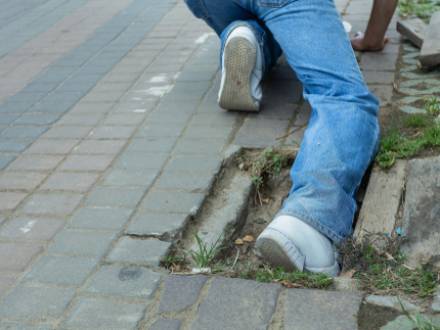 Sidewalks are part of everyday life in Illinois, whether you are walking through a neighborhood or on your way to work. Most people do not think twice about their condition until a defective sidewalk causes a serious fall.
Broken and uneven sidewalks can lead to some significant injuries. However, a damaged sidewalk does not automatically mean someone else is legally responsible.
Depending on the circumstances, a property owner or government agency may be liable when a dangerous sidewalk causes someone to trip and get hurt. If you were hurt after tripping on a broken or uneven sidewalk in Illinois in 2026, a Bloomingdale, IL personal injury lawyer can review what happened and explain your options.
Who Is Responsible for Maintaining an Illinois Sidewalk?
The first step in a sidewalk injury case is often finding out who was responsible for the area. That could mean a private property owner or the local government.
The Illinois Premises Liability Act, section 740 ILCS 130/2, sets rules for injuries caused by unsafe property. In general, property owners must use reasonable care regarding the safety of lawful visitors. In a sidewalk case, who is responsible depends on factors such as who controls the area and what caused the damage.
Not every crack or uneven section of pavement will lead to a successful injury claim. The type of defect and whether the responsible party knew or should have known about the danger can both matter.
When Can a Property Owner Be Liable for a Broken Sidewalk in Illinois?
A property owner is not automatically responsible for a public sidewalk just because it runs next to the owner’s home or business. Public sidewalks are generally controlled and maintained by the city or other local government that owns them.
However, a property owner may be liable if the owner created the dangerous condition or used the sidewalk in a way that contributed to the hazard. For example, an owner may be responsible for damaging the adjoining sidewalk and leaving it unsafe or for making changes to the property that create a dangerous condition on the sidewalk.
Can I Sue a City for a Defective Sidewalk in Illinois?
You may be able to sue a city or another local government after a sidewalk accident, but different rules apply. Under section 745 ILCS 10/3-102, local governments generally must use ordinary care to keep their property reasonably safe for people who are allowed and expected to use it.
The government must also generally have had actual or constructive notice of the unsafe condition with enough time to address it. "Actual notice" means the government knew about the dangerous condition, such as through an earlier report. "Constructive notice" can apply when a condition existed long enough that the government should have discovered it.
It’s also important to determine whether a public agency controlled the sidewalk because local governments have legal protections that private property owners do not.
What Evidence Can Help Prove a Sidewalk Injury Claim in Illinois?
If you are able to, document the scene as soon as possible. Sidewalk damage may be repaired after an accident, and other evidence can disappear over time.
Useful evidence may include:
-
Photos and videos: Take pictures from several angles to show the sidewalk defect and the surrounding area.
-
Witness information: Get contact information from anyone who saw the fall or knew about the sidewalk problem.
-
An accident report: Report the fall to the appropriate property owner or government agency and request a copy of the report.
-
Your shoes and clothing: Keep what you were wearing when you fell.
-
Medical records: Medical care can document your injuries and help connect them to the accident.
A lawyer may also look for earlier complaints about the sidewalk and inspection records. These records could help show how long the dangerous condition existed.
How Long Do I Have to File a Sidewalk Injury Lawsuit?
The deadline can depend on who was responsible for the sidewalk. Many Illinois personal injury lawsuits have a two-year deadline. However, much less time may be available when a local government is involved.
Under 745 ILCS 10/8-101, most injury lawsuits against an Illinois local public entity or one of its employees must be filed within one year. Missing the applicable deadline could prevent you from seeking compensation.
It is not always obvious who controls a sidewalk. Finding that out early can help determine which legal rules and filing deadlines apply.
Contact a Lombard, IL Personal Injury Lawyer
If you or someone you love was hurt after tripping on a broken or dangerous sidewalk, the lawyers at Mevorah & Giglio Law Offices can help. We offer a free case evaluation and schedule Saturday and evening appointments for clients who cannot get away during the workweek. We have three offices for your convenience: Lombard, Bloomingdale, and Naperville. Contact a Bloomingdale, IL personal injury lawyer and call 630-932-9100 today.









Offices in 3 Convenient DuPage County Locations
Lombard
900 E. Roosevelt Road
Lombard, IL 60148
Phone: 630-932-9100
Fax: 630-932-9868
MAP & DIRECTIONS
Bloomingdale
134 N. Bloomingdale Road
Bloomingdale, IL 60108
Phone: 630-529-2400
Fax: 630-529-7630
MAP & DIRECTIONS
Naperville
Phone: 630-420-1000
By Appointment Only

 Make a Payment


